


-
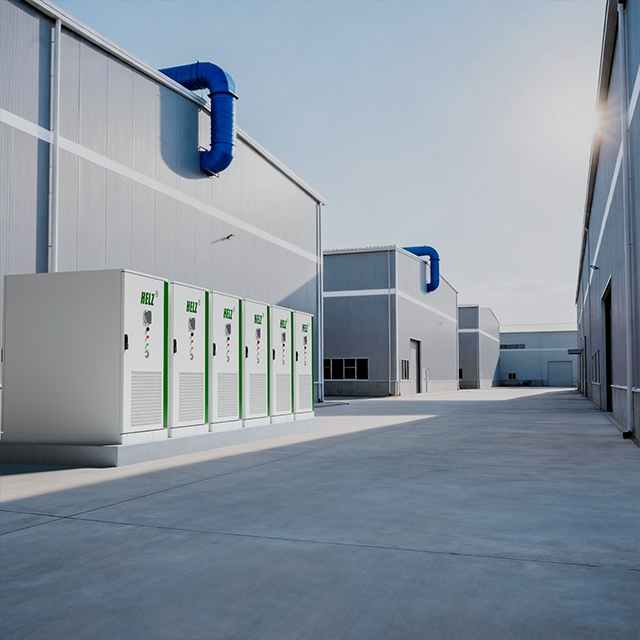
Industry Insight | What Defines a Safe and Qualified C&I Energy Storage Product?
-
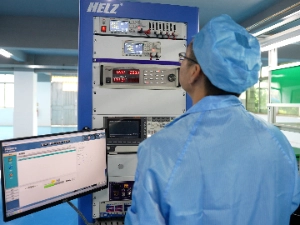
Energy Storage Safety: We Provide a “Protective Umbrella” For Every Kilowatt-Hour of Electricity.
-
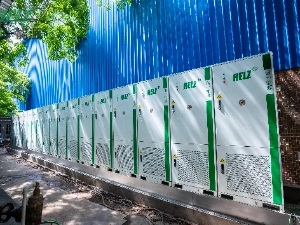
Foshan Steel Plant Cuts Monthly Power Bills of RMB 700,000–800,000,PV Alone Falls Short — Energy Storage Breaks the Bottleneck
Industry Insight | What Defines a Safe and Qualified C&I Energy Storage Product?
2026-02-06


In commercial and industrial (C&I) energy storage applications, product safety is the foundation of all value.
Whether used for peak shaving, PV-BESS integration, microgrids, or backup power, any safety failure in an energy storage system can lead to operational downtime, asset damage, or even serious accidents.
For this reason, evaluating an energy storage product should go far beyond capacity and price. The real benchmark lies in its system-level safety design.
1. An Energy Storage Product Is a System — Not Just Batteries
A common misconception is that energy storage products are simply stacks of batteries. In reality, a qualified C&I ESS is a highly integrated system that typically includes:
- Battery cells and modules
- Battery Management System (BMS)
- Power Conversion System (PCS)
- Energy Management System (EMS)
- Thermal management and fire protection systems
- Mechanical structure and electrical protection design
True product safety depends on how these subsystems interact under abnormal conditions, not merely on whether each component passes individual tests.
2. IEC 62619: Ensuring Intrinsic Battery Safety
IEC 62619 is an international safety standard for industrial lithium batteries, focusing on reliability under demanding operating conditions.
It evaluates:
- Battery behavior under overcharge, over-discharge, and short-circuit conditions
- Mechanical and thermal safety of cells and modules
- Consistency and long-term operational stability
From a product perspective, IEC 62619 ensures that the battery — the core energy unit — does not become a safety risk during operation.
3. UN 38.3: Making Energy Storage Products Safe to Deliver
Energy storage products involve high energy density and large physical volumes, making transportation a critical risk stage.
UN 38.3 is the mandatory safety testing standard for lithium batteries in global transportation.
Key test areas include:
- Temperature and pressure variations
- Vibration and mechanical shock
- External short-circuit conditions
For energy storage products, UN 38.3 confirms that no hidden safety risks are introduced before the system even reaches the installation site.
4. UL 9540: System-Level Safety Validation for ESS Products
UL 9540 is one of the most important system-level safety standards for energy storage products, especially in international and North American markets.
Unlike component-level certifications, UL 9540 assesses the entire system, focusing on:
- Safety coordination between batteries, PCS, EMS, and auxiliary systems
- Prevention of thermal runaway propagation at system level
- Effectiveness of structural design, electrical protection, thermal management, and fire mitigation
- Fault isolation and controlled failure behavior
In essence, UL 9540 answers a critical product question:
When a failure occurs, can the energy storage system contain the risk within itself?
5. Why System-Level Safety Is Becoming the Key Product Differentiator
As energy storage deployments grow in scale and complexity, the industry is shifting from:
“Certified components are enough”
to
“System-level safety is mandatory”
This transition means:
- Battery safety is only the baseline
- Integration and system design define product quality
- System safety certification is becoming a market entry requirement
Future-ready energy storage products are those that embed safety into the design stage, rather than relying on post-deployment mitigation.
Conclusion
A qualified C&I energy storage product is not defined solely by how much energy it can store, but by:
- Its ability to operate safely throughout its lifecycle
- Its resilience under abnormal and fault conditions
- Its compliance with internationally recognized safety standards
Safety is not an optional feature — it is the core product capability of any energy storage system.